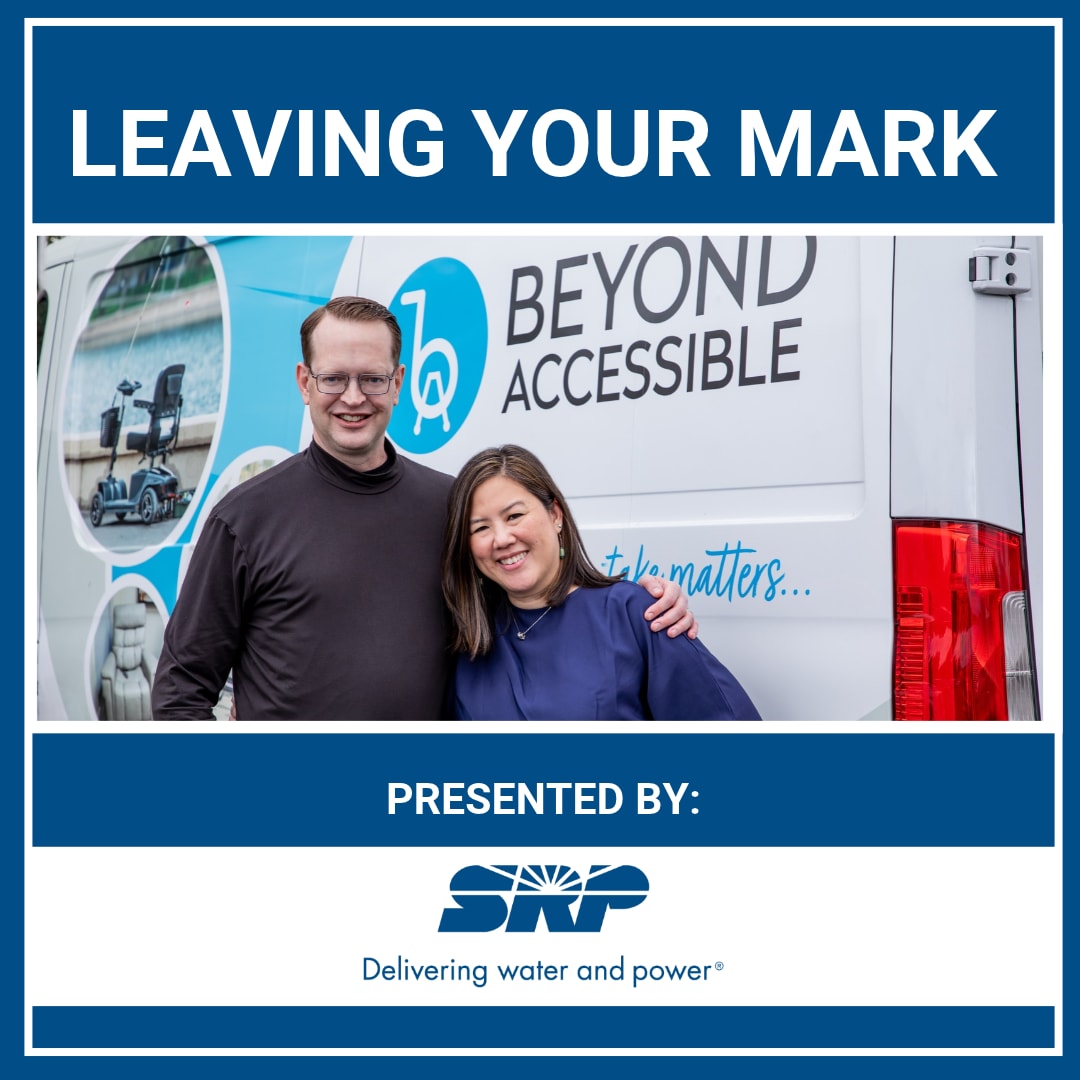
Beyond Accessible: Improving Access and Expanding Education on Medical Mobility Devices
Beyond Accessible: Improving Access and Expanding Education on Medical Mobility Devices
Shopping online has become the norm. It’s easy to search online for anything you want to buy and look up as many details and reviews on a product you have your eye on. If you end up disliking it, returns by store or mail are just as easy. For commoditized products like clothing, toys and even furniture, this process is simple.
What about medical products that people will need to rely on and are important for them to function day to day? For Lara Vineyard, finding the right medical mobility device for her father who had Alzheimer’s disease was not a simple online purchase.
“We threw a lot of stuff away or stored it in the garage and said we’re moving on to the next wheelchair,” Lara remembers.
A wheelchair is just one of many medical mobility devices that people may need to support their physical movement. These devices also become a critical aid for those who are diagnosed with a disability or illness. So, shopping online may not be the greatest approach, especially if you have to test that the device works and is easy to use. Not only that, these devices can be expensive and hard to return.
Lara’s husband, Scott, saw how frustrating it could be to search for and purchase medical devices that ended up not working as advertised. When he decided to leave his corporate job to become an entrepreneur, he started researching more about the durable medical equipment (DME) industry.
Lara, who has a background in marketing and digital communication, also thought about medical mobility equipment from the business side and realized that “customer education” was what was missing. They both recognized that educating customers on different types of devices, how they work and what would be the right fit would prevent failed purchases and a lot of disappointment. So, they worked on figuring out how to change the business model of the DME industry to make access to medical mobility devices a more positive experience for people.
In 2020, the Vineyards decided to open a brick-and-mortar store in North Scottsdale under the Mobility Plus franchise.
“There’s a lot of people who are going to be sitting in a chair, a wheelchair, a scooter or a lift chair for a large component of the day, and they don’t have the mobility to always get up and adjust the way that a lot of other people do,” Lara says. “We want to make sure those chairs and those seating postures are always going to be comfortable for them, and that’s not something you can get on the Internet.”
Scott, who has a background in finance, corporate strategy and electronics manufacturing, saw that scalability wise, their Mobility Plus store had a far reach in Arizona. From the beginning, he looked at their business from the perspective of customers who need medical mobility devices.
“They have other things to worry about, like the medicine, the doctor’s appointments, the medical tests. We didn’t want this [medical mobility equipment] to be a part of the problem. We wanted to be part of the solution and to take that worry and that weight off their shoulders,” Scott says.
In March 2025, the Vineyards decided to leave the franchise and start their own independently run business, Beyond Accessible. This has allowed them to prioritize a better in-person experience for their customers.
At Beyond Accessible, the Vineyards are mobility navigators who are trained to work with a variety of medical mobility devices. Lara adds that they and their other mobility navigators are trained by the manufacturers of the products they sell. So, they do a lot of in-house training to ensure that they can help customers learn about the devices and test them out. Scott describes their store experience as more of a “consultation” to educate customers instead of only trying to sell them a product.
“In our minds, this is not a product space or a type of product that is a commodity,” Scott emphasizes. “That’s where I think small businesses can really provide a huge benefit because of the time taken to problem solve with and educate their clients, given their passion. And they care about what they do and provide a physical space for people to come try devices out and get the expert advice of a mobility navigator.”
They provide wheelchair assistance for customers entering their store. Walking into the store, you can explore their showrooms. Their fall prevention room has products like grab bars and rollators, and what they call the “fun room” has scooters and power chairs that customers can test drive. They even have rooms to showcase lift chairs, shower and bathroom medical mobility products, medical beds and patient lifts. One of their more popular products is the foldable power wheelchair that weighs 29lbs.
As a small business, the Vineyards continue to focus on improving the “service” of medical mobility equipment. They include a complimentary one-year labor warranty on the products they carry. And regardless of where they bought their medical mobility device, anyone can bring it into Beyond Accessible for a complimentary tuneup in less than 10 minutes or a paid service repair with their in-house technicians.
Beyond Accessible works with over 20 manufacturers, including Pride Mobility, Forcemech, Nova, Golden Technologies and Healthcraft, who the Vineyards trust because of their strong service department. They appreciate the opportunity to meet with manufacturers who ask for their opinion on how to improve their medical mobility equipment and overall customer service.
Along with customers in Arizona, people all the way from Mexico, Canada, Singapore and even Guam have visited Beyond Accessible. Lara says their customer base includes younger people who are diagnosed with multiple sclerosis (MS) and Parkinson’s disease as well as seniors. Scott adds that as mobility navigators, they recommend products that would best serve their customers both now and in the future. One of their mobility navigators may recommend a customer with Parkinson’s disease to purchase a scooter instead of a power chair, for example.
As someone who was a caregiver for her father, Lara emphasizes the importance of recognizing caregivers who use a medical mobility device for their patients.
“One of our core tenets is to make sure that we’re also taking care of the caregiver because many caregivers are not considered part of the equation,” Lara says. “We always consider them as part of our equation because if the caregiver is going to be the person lifting the device in and out of the car, we want to make sure that they’re not going to get injured by lifting something too heavy for them.”
Beyond Accessible is also an option for those who have been struggling with getting the right equipment through insurance. Medicare currently covers durable medical equipment (DME), including wheelchairs, walkers and hospital beds for “home use”; Medicare Part B insurance covers devices like wheelchairs and scooters as long as patients work with a medical provider and a DME supplier who would send the required documentation to Medicare for approval. Patients must then pay the Part B deductible and 20% of the Medicare-approved amount.
However, this process can be both time-consuming and ineffective. Though they don’t discourage people from going the insurance route, Scott argues that this route does not always take “quality of life” into account.
“That’s a big difference where we ask people, ‘What do you want to do? What do you miss doing?’” Scott says. “Being outside, getting sunshine, that affects your health. It affects your mental health, and it affects the amount of Vitamin D you get. We view those as being very important things.”
What makes Beyond Accessible different from the prescribed Medicare route as well as other DME stores is that they provide a tailored experience. Their mobility navigators listen to each customer’s concerns and take the time to choose the best medical mobility equipment that suits their needs.
“It’s not a commoditized business, and it shouldn’t become one because if we go that route with it, you’re going to end up with a lot of landfills full of stuff that didn’t work,” Scott says. “By the time you bought three products to find one that you like, it would have been less expensive to go to a small business and get the right one first.”
They also encourage people to consider a medical mobility device even if they think they don’t need one all the time.
“I look at it as a backup. So, if you’re having a day where your balance may not feel well or you’re unable to walk as far, then you have a device that you can do it without pushing yourself too hard,” Lara says. “If tomorrow, you’re feeling like you’ve got a little bit more strength and you’re going to go a little further, you don’t have to use that device unless you need to. Having one is always a very good thing for someone with any type of mobility challenges.”
Under the Agency for Healthcare Research and Quality, the Healthcare Cost and Utilization Project reported that in 2017, falls were the most common cause of injuries in the emergency department. Lara sits on the Arizona Falls Prevention Coalition Board and says falls continue to be a major concern for the senior population.
Falls can happen to anyone. Putting fall prevention equipment like grab bars in the shower can be a key long-term investment for one’s health and prevent the danger and long-term injuries of falls. “We tell people that using a device or installing a fall prevention product isn’t a crutch. It actually gives you freedom and enables you to do what you want, so that’s a big thing that we stress here,” Scott says.
They clarify that their products are available for everyone, even themselves. “I’ve injured my knee since we’ve been in this business. Scott has used a lot of products since he’s had multiple leg injuries, and we would never sell or use anything that we would not recommend for our own parents,” Lara says.
Beyond Accessible recently won a 2026 azcentral.com Best of the Desert Community’s Choice Award, which marks their fifth year winning this award in a row.
Community impact remains a priority for Beyond Accessible. Lara, Scott and their employees volunteer their services all over Arizona, where they have completed over 150 mobility device tuneups and complimentary repairs for over 1100 devices. They offer home calls for those who cannot visit their store and provide free classes to educate their community on medical mobility equipment.
Their “Pay It Forward” program allows them to donate gently used medical mobility equipment to their community members. One time, a person came into their store with a scooter in poor condition. They were able to replace it for free with a newer version of the scooter that someone else previously donated.
“It brought him into tears as well as the person from the assisted living facility that he lived in who drove them here. It was just an amazing moment,” Scott recalls.
Looking to the future, the Vineyards hope to expand Beyond Accessible by encouraging others to start their own durable medical equipment businesses with the help of their business plan, Transition Solutions.
It’s challenging for them to reach more rural communities in towns like Payson and Pinetop-Lakeside. Educating their community members on durable medical equipment can support the growth of Arizona’s small businesses and the reach of medical mobility devices to more people.
“We’re making mobility more mobile,” Lara says. “We really would like to make the information that we have learned more readily available for others to be able to make a positive influence and to bring it to their communities.”
Visit beyondaccessible.com to learn more about the Vineyards’ business in Scottsdale.
Images